Physical Address
304 North Cardinal St.
Dorchester Center, MA 02124

Physical Address
304 North Cardinal St.
Dorchester Center, MA 02124

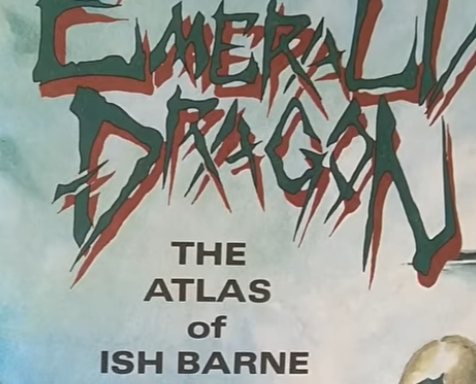
Ishbern, the Holy Land. Once a veritable sacred ground in which humans and dragons coexisted, soon began to notice its flowing waters suddenly running red. A curse had been lain upon this halidom, snuffing the life out of anyone who carried draconic blood. One by one, the dragons fell to the curse, forcing the few surviving dragons to abscond from Ishbern. They travelled across various realms until they settled into what would be their new sanctuary: the Spirit Realm of Draglia.
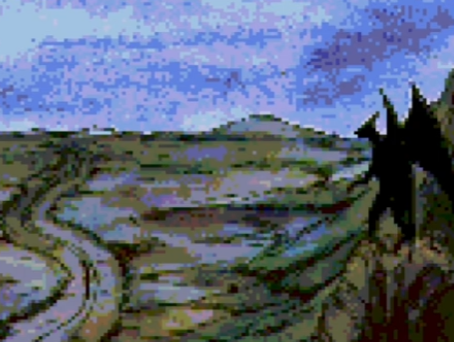
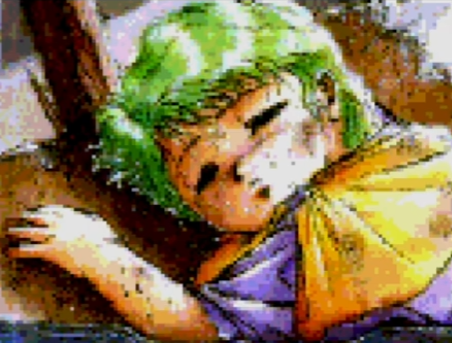
After the turn of about two thousand summers, a shipwreck washed ashore in a cove in Draglia. The dragons were surprised to find one sole survivor: a human girl. Lost to her was the recollection of her name, as well as the recollection of where she came from. Because dragons lived for a very long time and children were seldom born, they took the girl in as one of their own, giving her the name Tamrin, and treating her as a little sister to the dragonkin.
She grew up alongside a dragon of similar age named Atrushan. But after twelve years, Tamrin decides to return to Ishbern to live among her fellow humans and learn more about her past. Atrushan, heartbroken at the thought of having to say goodbye, bestows upon her a gift: one of his horns. He tells her that if she ever needs him, then to blow into it.
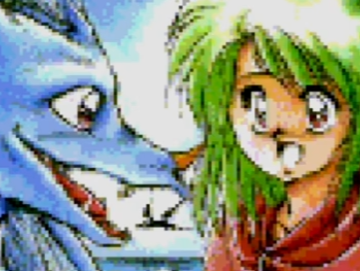
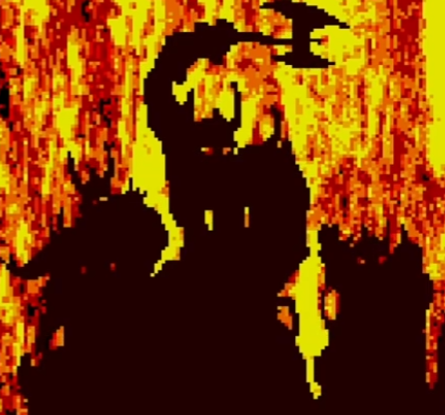
Tamrin arrives in Ishbern only to find out that it had been put under siege at the hands of the Hellion Army for the past fifteen years. After the passing of three, and witnessing the might of Garsia the Infernal One and the Warlord Ostracon toppling village upon unsuspecting village, it becomes more and more clear to Tamrin that something must be done. Tamrin decides to fight back and blows on the horn given to her by Atrushan on top of the Hill of Prayers.
The sound of the horn transcends realms and reaches Atrushan in Draglia. Determined, Atrushan persuades Draglia’s Elder, the White Dragon, and receives permission to go to Ishbern. But before he goes, he is told to take the Silver Scale, a special scale that allows Atrushan to conceal his true self and assume the form of a human to protect him from the curse.
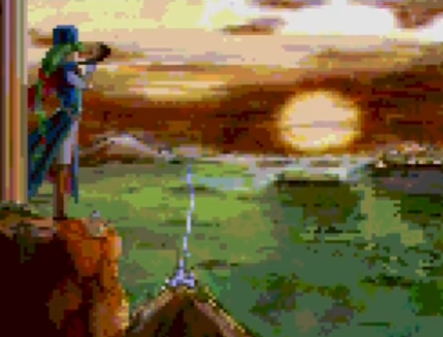
Thus, Atrushan flies to Ishbern with the intent to reunite with Tamrin and go on a journey to fell the Infernal One. However, to do that, he must collect the five Emerald Dragon graces, which will allow him to summon the magic of the Emerald Dragon. Atrushan descends upon Ishbern, with the small town of Urvan just on the horizon, and it is here that this blog post begins…
Hello everybody, welcome back to Yappari.Info, the online blog site that refuses to die. Today, I’m going to be talking about a little-known game called Emerald Dragon, a humble JRPG developed by Glodia. While the game was originally released on the NEC PC-88 series of computers, I’m going to be discussing the PC-Engine Super CD version.
I will be talking about this version for three reasons. Firstly, it is one of the three versions with an English fan translation. Secondly, that fan translation was released very recently at the time of writing—or drafting, or at the very least brainstorming, depending on how long this takes to finish. Thirdly, it is considered by many to be the definitive way to experience Emerald Dragon, language barriers ○○.
That said, Emerald Dragon is the second JRPG developed by Glodia after Zavaş, and it is also one of their most popular titles, if not the most popular. While Emerald Dragon is essentially unknown in the West, in Japan, Emerald Dragon was a big hit, and nowadays, it is considered a classic in terms of retro Japanese PC gaming.
Like I previously stated, the game originally came out on the PC-88 on December 12, 1989. It was also ported to the PC-98 ten days later, on December 22, 1989; the X68000 on December 6, 1990; the MSX2 on December 26, 1990; and the FM Towns on May 28, 1992.
The PC-88 and PC-98 versions were published by Basho House, a small publishing company that had previously worked with Glodia on their fantasy shooter Testament. Meanwhile, the other PC versions were published by Glodia themselves.
Glodia is a now-defunct gaming studio founded in 1986 by former Telenet programmer Osamu Ikegame. Most of the company was actually made up of former employees of Telenet Japan, such as Tenpei Sato, who composed music for games such as XZR/Exile, Valis II, and Cosmic Fantasy 1.
Glodia released about 14 games before folding in 1995, such as Lyrane, Vain Dream, and Die Bahnwelt. Many employees from Glodia would break off and form the company Right Stuff in 1991, which would develop a few games such as Alshark, Battle Tycoon: Flash Hiders, and Revery: Izanai no Masuisho, before also folding in 1999.
Emerald Dragon was later remade for the PC-Engine Super CD-ROM2 in January of 1994, and the Super Famicom in July of 1995, both by Alfa System. The PCE version was published by NEC, while the SFC version was published by Mediaworks. I will be talking about the differences between these versions later, but for now, I’ll mainly be sticking to the PC Engine version.
For the staff of the PC Engine version, the original story and designs were created by Atsushi Ii, also known as E.Jun, with original artwork created by Akihiro Kimura. The game’s soundtrack was composed by Hirohiko Fukuda, while the supervision was handled by Shoji Masuda. Visual programming and direction were led by Keishin Iwasaki, alongside system design by Hiroshi Hasegawa and system programming by Daisuke Takagi. The scenario programming was done by Masayuki Akazawa and Yasumasa Konishi. Debugging was carried out by Naoki Suda, Makoto Ando, Takashi Inoue, and Hiromi Kanuma, with Tetsuya Sasaki serving as the programming manager.
In terms of visuals, map graphics were created by Hiroshi Okada, and character sprites were done by Jun Hayashida and Junko Yamamoto, with battle graphics by Hiroshi Hayashi and Tatsuya Nagata. Additional visual graphics work was contributed by Naomi Komatsubara, Soji Nakazato, Yoichi Seki, Hironori Shirakura, Yuichi Sano, Yasuhide Sasagawa, Shinsuke Uchiyama, Nami Takayama, and Eiru Fujisawa. Sound effects and ADPCM audio were produced by Yuji Yoshikawa and Takuya Yasuda, with ADPCM correction done by Yumiko Morinaga, and PSGBGM provided by, uh, Music Studio.
The project was directed by Yasushi Matsumoto and Hirotada Hashimoto, with the executive producers Takeshi Tanaka and Kiyoaki Yasuda overseeing the project. Hajime Shimizu and Masao Takeuchi managed the development, and PR was handled by Nobuyuki Kondo and Makoto Ando.
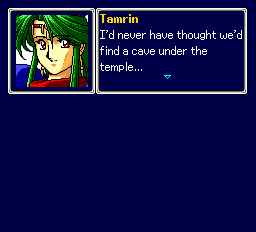
The PC Engine version received a fan translation on December 31st, 2025, by the team of stargood, the same people who did Galaxy Fräulein Yuna, and seeing from that game, you can expect the translation to be of professional quality. The patch contains very faithfully translated dialogue, while also sounding natural and fluid for a native English reader.
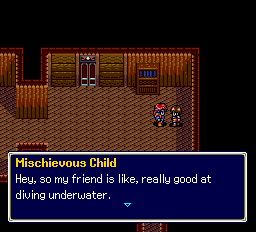
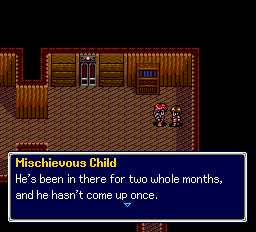
For some reason, people on the internet seem to have the misconception that natural dialogue and a faithful translation are two things that are mutually exclusive, but this patch is one of those translations that prove otherwise.
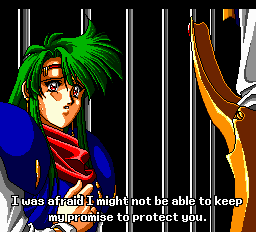
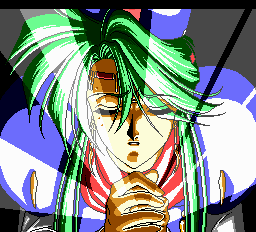
The game also provides subtitles for the voice-acted cutscenes, which is really nice, and mechanically very impressive. One issue I had, though, with these portions is that there is some audio delay. A scene would play, the subtitles would appear, and you could see the character’s lips move, but the actual audio wouldn’t play until like five seconds later. I don’t know if this is an issue with the patch itself or my emulator, but it made cutscenes a bit disorienting to me. Considering this isn’t something I’ve seen a lot of people mention, I assume it’s just my emulator.
Though a similar auditory issue I have is that sometimes, the wrong BGM for a location would play. Like I’d enter a dungeon, and instead of one of the dungeon themes, it would play the town theme or something for about five seconds, then the game almost realizes “Wait, this is the wrong theme!” then corrects itself and plays the dungeon theme instead.
Another issue I had was applying the patch itself. I never really had issues with patching ROMs as I’ve been playing fan translations and ROM hacks since I was a teenager, but patching this game in particular was a whole ass science project. In the readme file, there are various instructions depending on what format your ROM is, such as if it’s a CCD but no CUE, a CUE with a ton of BINs, or an ISO file. I followed the 20-step instructions for my ROM, which was formatted as a CUE and various BIN files, but it didn’t work.
So I tried to make sure I had the correct dump of the ROM; for reference, there’s the initial release, Revision 0, and a later revision, which fixes a few bugs, Revision 1. The patch is made for Revision 1, so I made sure I had a dump of Revision 1. I tried following the instructions closely, and guess what? It didn’t work.
I then tried the other patching methods in the guide, just in case I misunderstood something about the specifications, but none of those worked either. Eventually, I gave up and just waited for someone to post a pre-patched version of the ROM online, and played that instead.
Anyways, the major players of this project consist of Supper, who did the translation and hacking; cccmar, who did the editing and testing; and Oddoai-sama, who did the playtesting. A lot of the information about the patch and translation choices is included in the enclosed readme file, which I highly recommend reading. Even if you don’t plan to play the game, a lot of the little tidbits, trivia, and details mentioned about the translation are good reads in and of themselves.
One thing to note is that this patch is not based on the existing SFC fan translation at all, and is done completely from the ground up. And, I’d honestly say the PCE script is better than the SFC version. It’s more lively and engaging to read while also feeling more faithful. One big example of said faithfulness comes from the names. When you play the game, you’ll notice a lot of the names may sound unusual, like Atrushan, Hvovi, Karshvar, and Saoshyant…I don’t even know how the hell you’re supposed to pronounce the last one.
A lot of the names come from Avestan-language terminology relating to Zoroastrianism, an Iranian religion centered around the text corpus, Avesta, and the teachings of Zarathustra Spitama.
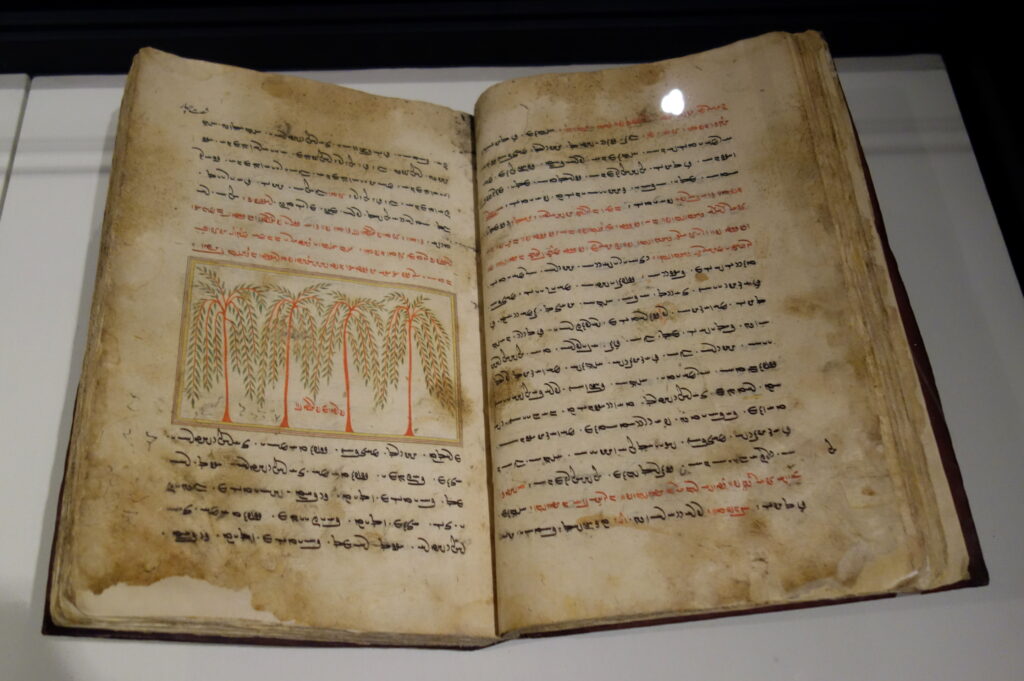
I actually find this aspect really cool, because in many JRPGs, they tend to pull references from religions and mythologies such as Christianity, Buddhism, Greek Mythology, Norse Mythology, and so on, but I rarely see games pull names from Zoroastrianism. Off the top of my head, the only other time I’ve seen a game reference Zoroastrianism is the Verethragna in Vanguard Bandits, which was renamed to Ultragunner in the localization.
That said, according to Supper, a big time sink of this project was researching those names and finding the best way to represent them in English. And for that, I have to really give it up for Supper; I will always have loads of respect for people who do the necessary amount of Historical research in a translation, to best represent the original creator’s original intentions.
Transliterations from Avestan oftentimes have unintuitive conventions, at least when looking at them through an English-tinted lens. For example, the letter “V” is pronounced more like a “W” in many cases, and “kh” is pronounced like an “H.” For example, there’s a character in Emerald Dragon named Khosrow (ホスロー, lit. Hosurō), and looking at the katakana and now knowing the origin of the name, it’s clearly meant to be pronounced as “Hoss-row,” but for the longest time, I was saying “Cross-row.”
Some notable names, at least to me, are the town Kerdir, which comes from “Kerdir,” another name for Kartir, a powerful priest during the reigns of the four Sasanian kings in the third century. Then there’s the character Karshvar, who’s named after Karšvar, one of the seven delineated lands organizing the world map into a seven-story ziggurat representing the cosmic mountain.
The castle of Druguant, whose name comes from the term “Drəguuaṇt,” meaning “owner of falsehood,” which designates all beings who choose Druj (Lies/Chaos) over Asha (Truth/Order), the two cosmic opposing forces in Zoroastrianism. And the sage, Khshrunoom, which kinda makes me think of “mushroom,” but is likely a corruption of Khshnoom, which comes from Ilm-e-Khshnoom, a school of thought practiced by a small minority of Indian Zoroastrians.
The SFC fan translation missed a lot of the more obscure references, presumably because it wasn’t as easy to find or research all of the names at the time. Which is why I say that version is less faithful than the PCE version. For instance, the SFC version translates Kerdir, Karshvar, Druguant, and Khshrunoom as Kildale, Karshwarl, Draugwand, and Husulnum, respectively.
One name I find interesting is the world the game takes place in: Ishbern. In Japanese, the name is essentially the same, イシュバーン (Ishubān). However, different versions handle the romanization differently: this patch uses “Ishbern,” while the Super Famicom version renders it as “Ishbahn.”
In the original PC versions, the name appears as イシュ・バーン (Ishu Bān), with the middle dot indicating that “Ishu” and “Bān” are meant to be separate words. However, in the Super Famicom and PC Engine remakes, the name was standardized into a single word, though a few instances in-game still mistakenly present it as two words.
Another little thing involves one of my favorite characters, Falna (ファルナ lit. Faruna). In the readme file, they suggest that the name might be a contraction of Khvarenah (フワルナフ lit. Fuwarunafu), an Avestan term referring to a Zoroastrian concept denoting glory or splendor. They note that if this is the case, Harna, Kharna, or Farna would be more accurate (with “Farna” being the choice used in the SFC version), but they felt that “Falna” sounded better than the alternatives and ultimately went with it. Personally, though, I’m partial to “Kharna.”
Another cool detail comes from stuff like the enemies, the main baddie is called Garcia (ガルシア lit. Garushia) in Japanese, just like the Spanish name. Supper felt the name was a bit out of place, and such an unremarkable name was more fitting for an unremarkable fighter than the literal demon king. They cited Ted Woolsey’s decision to rename Tina to Terra on the grounds that Tina sounds exotic to a Japanese player, but not really to an English player.
While Supper felt that Tina → Terra was a stupid decision, they felt that renaming Garcia in this case was warranted. That said, they only renamed him to Garsia, which I feel is still effectively the same name, and only a slightly less common form of Garcia. With the Japanese name, it makes me think it was supposed to invoke the same kind of maō energy as someone like Ganon, Ghaleon, Gharnef, Galeem, or Galam. So, to remain faithful, but also give the same imposing maō energy, I would have gone with Gharshia or something.
Garsia’s army was also renamed. In Japanese, they’re referred to as the Demon Army (魔軍, lit. Magun). However, Magun isn’t a standard Japanese term, and the literal reading, “Demon Army,” sounded too generic. More broadly, Supper felt that direct kanji translations often come across as robotic or overly verbose, so they aimed to create names that would feel more at home in a fantasy novel or something.
As a result, the Demon Army became the Hellions, the Demon King became the Infernal One, the Demon General was changed to Warlord, the Demon King’s Palace became the Infernum, the Demon Beasts became Hellspawns, and the Demon War Ogre became the Warmonger.
Apart from the translation itself, they also added a lot of other features to this patch, like adding a fast-forward option to battles if you hold the I button, speeding up text boxes, and shortening/skipping most animations. The option to enable or disable in-game voice acting for NPC dialogue was also added. While they are nice to listen to, they kind of slow down the game a bit if you backtrack a lot and go around talking to NPCs. The option to skip cutscenes was also added. You can just press the Run button to skip a cutscene, but I wouldn’t recommend this unless you’re replaying the game or something.
The patch also adds a run option by holding the I button in the overworld section. It’s kinda similar to Mother 1 when it was localized to EarthBound Beginnings. And just like Mother 1, this was a debug feature that already existed in the game originally, which was added in the actual game by the translation. Actually, ○○ from the battle speed up, all of these additions were debug features that were added to the main game.
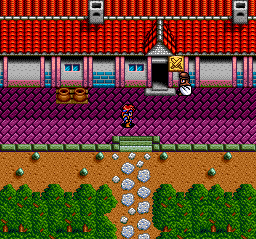
The game’s story might sound pretty standard at face value, but as you get more into the game, there are a lot of twists and turns, which honestly kept me on the edge of my seat throughout the run. There is the overarching story of defeating Garsia, collecting the sacred McGuffins to restore the titular Emerald Dragon, and getting the girl at the end, but each character also has their own arcs, motivations, and little stories that keep things entertaining.
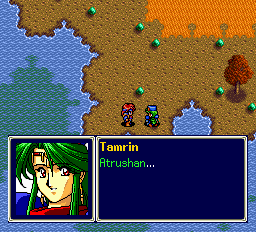
For example, you get a party member early on named Barsom, a boisterous and drunken warrior who was a former royal guard of Eirvad. Before the events of the game, he finds out that a Baron named Fravard was conspiring with the Hellions, but because of Fravard’s clout and influence, he was able to instead charge Barsom with the crime and ordered the military police to expel him from the castle. When Atrushan teams up with Barsom, he agrees to infiltrate Fravard’s Manor and find the correspondence letters between him and Ostracon. After defeating Fravard and reporting to the king, Barsom gets his knighthood back and leaves your party to serve his king as the new captain of the castle guard.
Hell, even a lot of the NPCs are very lively. And like Lunar, a lot of the NPCs will have new dialogue after different story events. It’s actually quite fun going from town to town, talking to everyone. I really enjoy learning more about Ishbern and listening to what everyone has to say.
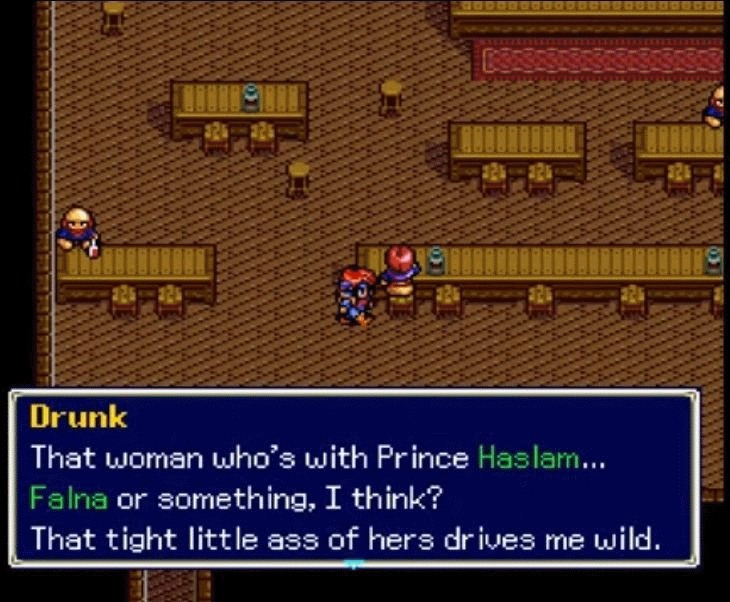
While the game does have its light-hearted moments, it also has a lot of its fair share of somber and depressing moments. Characters, both good and bad, die, sometimes in sudden ways. Additionally, many characters who are close to them grieve and have to cope with said loss. These moments are treated with the respect they warrant, and overall, the game does a good job at tugging at the player’s heartstrings and showing the audience a real sense of raw human emotion.
Between the endearing cast, how much each character’s arc is fleshed out, how much the game balances light-heartedness and tragedy, and the interesting—albeit simple—worldbuilding, the game really wears its heart on its sleeve in terms of story. It’s a very authentic story that feels very honest and intimate, and to me, the overall tone is very genuine and grounded.
It’s an emotional roller coaster, and I can see why the game was as popular as it was in Japan. The game had a very deep narrative and very character-driven storytelling, which was not very common at the time of the PC-88 release. The only other game at the time that had a similar level of storytelling was Burai, but that game is a lot less well-known.
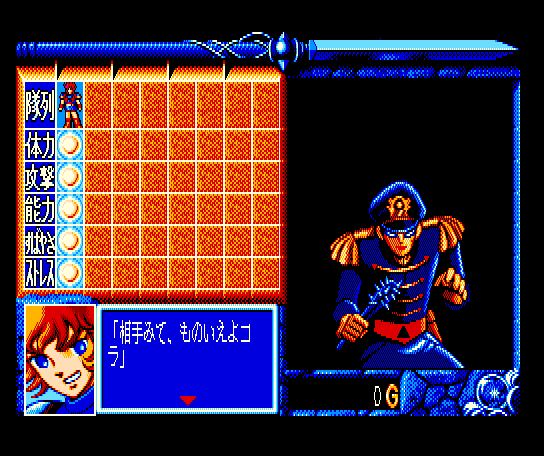
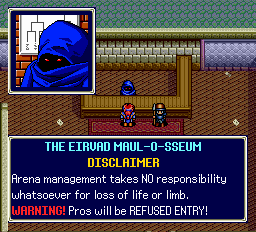
Onto the gameplay, this game plays like many of its contemporaries; you’re a guy with a sword and a shield who starts at a village surrounded by various other villages. In towns, you can do the usual: talking to NPCs, buying weapons, armor, and restoratives, and resting at inns. What sets Emerald Dragon apart in this regard is that a lot of towns also have little mini-games, some villages will have arenas called the Maul-o-sseum, some villages have casinos, and some villages have both. I never spent much time on these, but they’re a fun little distraction if you want to kill time or grind for extra money or EXP.
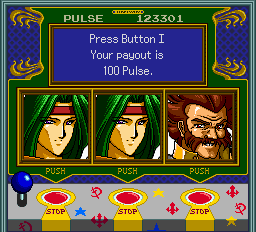
Inside the inns, though, you also have the item storage. Which isn’t a new mechanic for the genre, but I find this game’s item storage kinda interesting, because something that the game doesn’t directly tell you is that when party members leave your party, all their items get transferred to the storage. Additionally, in bigger towns, you’ll also have a wandering troubadour who will fast-travel you to another town for a small fee.
Another thing that sets Emerald Dragon apart is the TeamSpeak mechanic, or “Confer,” as the game calls it. It’s similar to the Party Chat mechanic in Dragon Quest IV. Your various party members will have a chat about the current scenario, the current objectives, and whatnot. This is a mechanic that I like a lot, as it does a decent job at telling the player what they’re supposed to do next. It can also provide the player a push in the right direction, if they haven’t played the game in a while, and they need a refresher on what they did last.
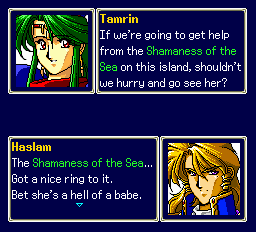
One issue I kinda have, though, is that these chats vary greatly in how useful they are; some can be very useful in telling you “the next dungeon is to the northeast of this town, let’s go there and defeat the boss,” while others can be the most vague “hints” in the world, and virtually tell you nothing at all. Like, one of them is quite literally one of the characters, Khrosrow, saying, “C’mon, let’s go infiltrate Druguant Castle!” and that’s it. Like, okay…? How do I get to the castle? Which direction is in proximity to the current location? What can I expect there?
There’s another portion where a doctor named Varamur temporarily joins your party and asks you to find a herb for him in “that cave” to the north.
The fuck do you mean “that cave?” Are you seriously going to be so cryptic that you won’t even tell me the name of the god damned cave?
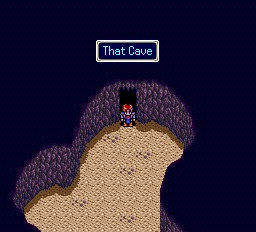
Okay, but my point still stands. I noticed in my run that the further in the game I got, the less helpful these chats were, and I eventually had to start using a walkthrough for some parts of the game. Something I really like about these chats, though, is that they’re very character-driven and do a great job at fleshing out the personalities and motivations of Atrushan’s party members.
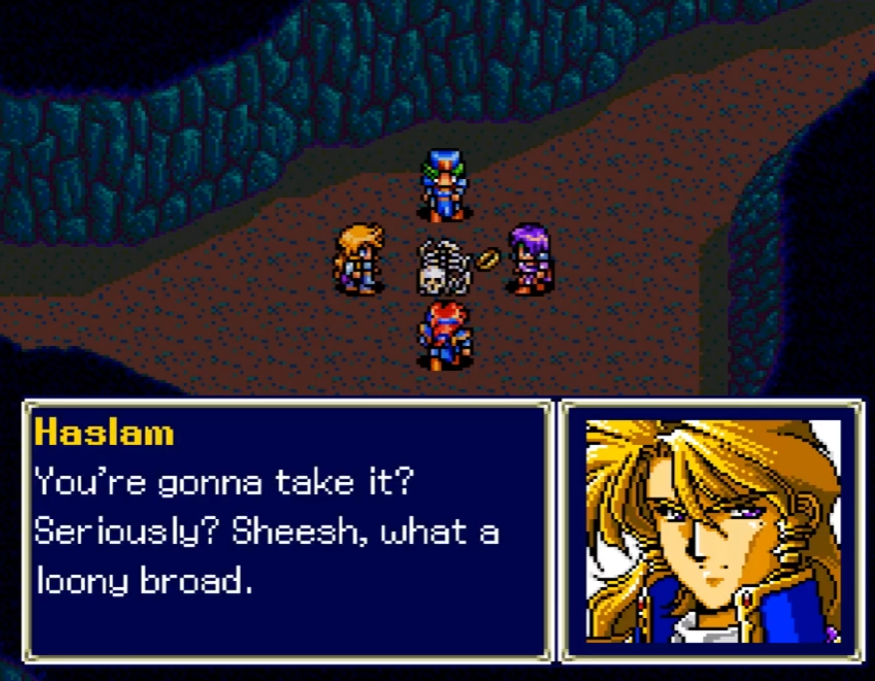
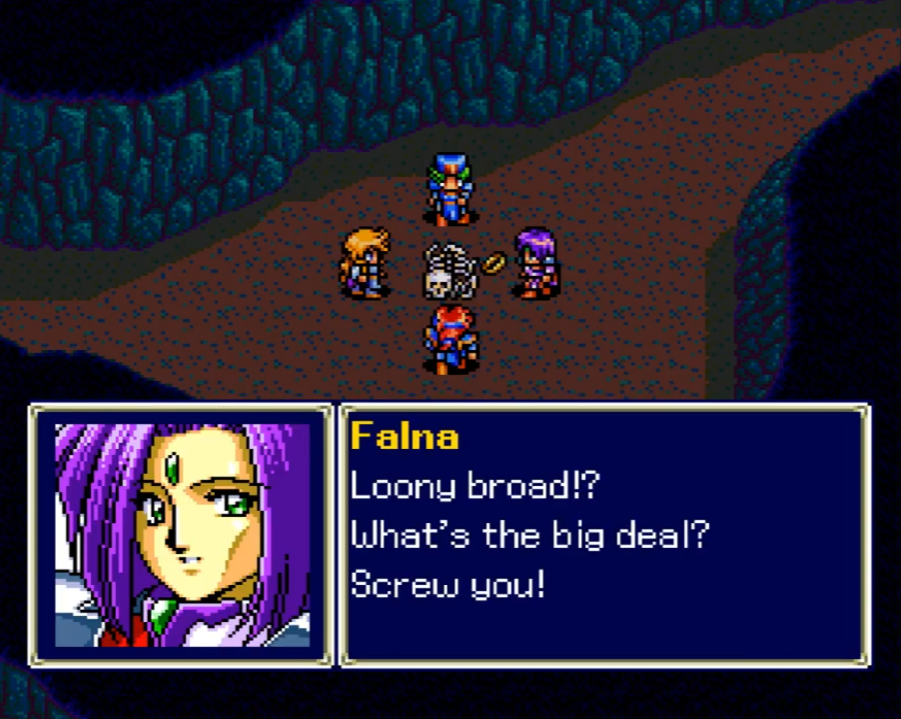
Some of my favorites are between two characters you get: the Prince of Eirvad, Haslam, and Haslam’s Handmaiden, Falna; they’re two characters that have the type of ship dynamic that I’m so very fond of. They spend most of their interactions bickering and fighting a lot, but you can easily tell they’re crazy for one another. I’m reading their interactions, and I’m just thinking “so… when do they fuck?”
But speaking of fighting, the combat system is pretty interesting. When you enter battle, you’re taken to a top-down perspective, similar to games such as Ultima III: Exodus. Each character has a certain number of Action Points, and committing an action takes up a certain number of Action Points: moving around the field, attacking, using spells, or giving orders. When you run out of Action Points, your turn is over, allowing for either the enemy or your other party members to take their turns.
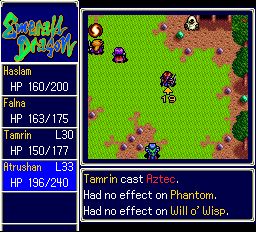
This battle system is actually taken from Glodia’s previous work, Zavaş, but the big difference is that in Zavaş, all your party members are completely AI-controlled. As the player, all you did was sit in the cuck-chair and watch. In Emerald Dragon, though, you have more control…kinda.
While you do control Atrushan, every other party member is still AI-controlled. To circumvent this, though, you only get a game over if Atrushan dies. If anyone else is defeated in battle, they simply “flee” and come back to life with 1 HP after the battle.
Attacking enemies in a battle is very similar to the bump-combat in Ys; you just walk up to the enemy you want to attack, and your character slashes at them. If you want to do something besides attack, you can hit the II button during any of your party members’ turns, which brings up a menu that lets you choose between various non-attacking options.
You can select Pass, which just skips Atrushan’s turn. Orders, which allows you to select a party member, then the game brings up a cursor, which allows you to select which enemy you want the AI-controlled party member to target. This can be handy in boss battles when you have to handle their various mooks alongside them, especially if any of those mooks can heal the boss.
Then there’s Items, which allows you to use an item in battle, like healing items. When you use healing items, though, you can’t really choose who you want to heal; it just automatically heals the party member with the lowest current HP. You can also use temporary statboosting items, like the X items found in Pokémon. Then there’s Escape… we’ll talk about that later.
When you win a battle, you’ll gain both EXP and Pulse. However, Atrushan and Tamrin are the only party members who can gain EXP and level up. You may think that having a team full of AI-controlled party members who cannot level up may become a liability, but your team members are surprisingly very competent. Many of the party members come and go, and the new ones that join are stronger than the ones that leave.
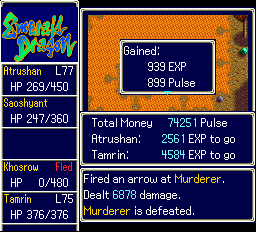
As long as you keep everyone’s equipment up-to-date, you can realistically have Atrushan sit in the back and do nothing, and watch the AI take care of everything. Hell, even the healers do a good job making sure everyone is topped off to the point where you’d only need to stock up on healing items for notable bosses, or healing outside of battles in a dungeon or something. Pulse, on the other hand, is just the currency; you can use it to buy weapons or items in towns and shit.
On the topic of spells, Tamrin will also learn new spells. Sadly, you can’t look at these spells in the status screens, so you’ll never know what they all are. Since the game lacks an MP system, your mages can realistically use magic until they run out of AP. However, this is balanced by the fact that spells have a chance at messing up, which will display a quote from the caster, lamenting their mistake, and automatically end their turn, regardless of how many Action Points they have left.
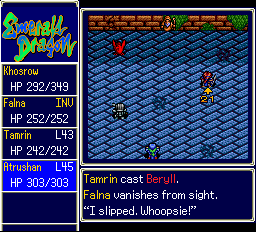
In any case, something I noticed in this game is that the use of AI-controlled party members does a good job of making battles look more complex than they actually are. In other words, your party members don’t really add much mechanical complexity, and your actions as Atrushan are rarely affected by them unless you specifically order them to attack a target or someone is critically low on health.
That said, it creates a neat psychological effect: battles feel far more dynamic than they actually are, giving the impression that a lot more is happening. As a result, fights feel more engaging than they would if Atrushan were fighting alone. It makes me wonder whether this was an intentional design choice or just a side effect of technical limitations.
That said, while I can appreciate that aspect, the battles generally have the strategic depth of a kiddie pool. They’re more complex than Cosmic Fantasy 2, but that really isn’t saying much. There is at least a crit system that multiplies your damage output by four, an accuracy stat—especially noticeable with your archers—and status conditions. Still, for a top-down combat system, I was hoping for more going on, similar to Lunar: The Silver Star, Live A Live, or, honestly, even Ys. There are only so many times you can have Atrushan bump enemies to death before it starts to feel repetitive.
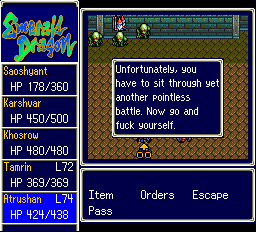
Speaking of, that isn’t even my biggest criticism. A greater sin is how frequent encounters are coupled with the fact that you can’t run from battles. Well, okay, the game gives you the “option” to run from battles, but the chances of actually running away are comically low, to the point where the “You successfully got away” text may as well be unused content.
Like, for reference, in the first area in the game, outside of Urvan, you start at level 1. This is standard. You are straight up unable to escape from any battle until you’re level 13, where the chance becomes 5%, and every subsequent level adds 5%. By the way, in a normal playthrough, level 13 is around the level you’d be when you’re already in the second area and long left Urvan.
Throughout my playthrough, I was able to run from a couple of battles. But 99% of the time, the Escape option is as good as worthless. It’s about as worthless as a Computer Science degree in 2026, or as worthless as the political opinions of a wealthy online influencer, or as worthless as this dumb, stupid idiot who flies around my room, trying to teach me math.
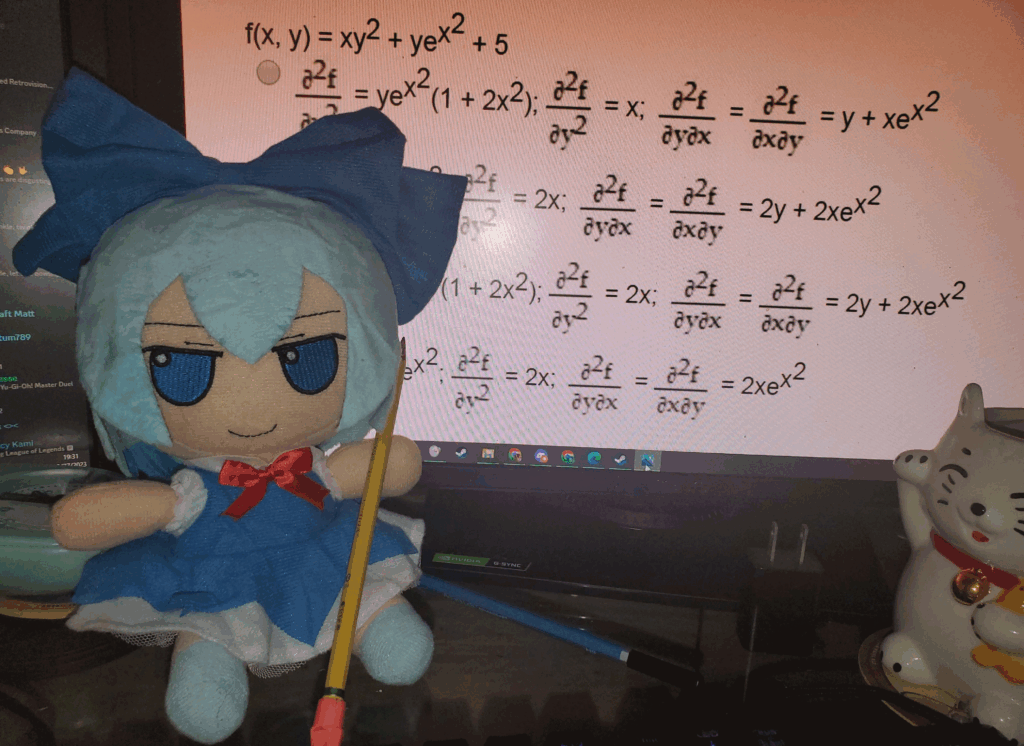
I noticed that when I got near the end of the game, when my level surpassed 100, I was able to run away from battles more often. Additionally, when you’re at a very, very high level, enemies in previous areas will not spawn altogether. But for the whole game before that, attempting to escape is a fool’s errand. You’ll only be met with the usual “Unfortunately, you couldn’t escape the battle,” textbox. Here, this is what the text should have said instead:
Anyways, when Atrushan and Tamrin level up, they gain various stats, HP, Strength, Defense, Intelligence, Agility, and Action Points. HP is self-explanatory. When you take hits, the number goes down; once it reaches zero, the character in question either flees, or if it’s Atrushan, it’s curtains for you.
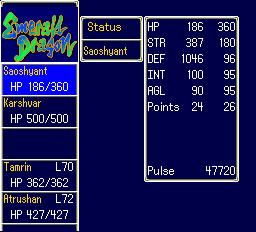
Strength increases the amount of damage one does when they attack, while Defense reduces the amount of damage taken from an enemy’s attack. Intelligence affects the success rate of magic, while Agility affects your accuracy with physical weapons and avoidance.
In the overworld, you can press the Run button to open TeamSpeak. …I don’t know why they felt it was important enough to warrant having its own dedicated button over save/loading, the map, the status menu, or anything like that, but hey, what do I know? The Select button will open up a quick menu, which gives you another option to open TeamSpeak, view the map, or save your progress.
The II button will open the main menu, in which you have six options: Equip, Info, Party, Items, Status, and System. Equip will allow you to…equip a weapon, shield, armor, or accessory. Info will show you the stats of your items or provide a little description of your key items. Something that bothers me, though, is that a lot of the regular items don’t get descriptions, and I struggle to really know what any of them actually do.
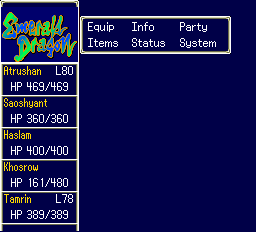
I mean, Potions and Hyper Potions are self-explanatory—I’ve played Pokémon, and I’ve played enough RPGs to know what Tents are for. But what am I supposed to do with a Glowmoss or a Detonator Ruby? The only way to really know what these do is with trial and error.
Anyways, back to the menu: Party allows you to modify your turn order, or adjust what formations your party starts in. Items allows you to use your items like healing items and stuff, as well as allow you to swap an item between party members. Status allows you to view your party’s stats. And lastly, System allows you to save your game, load your game, modify text speed, modify walking speed, and toggle voice acting.
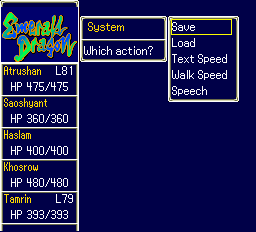
On the topic of saving and loading, one odd thing that this game does is that whenever you boot up the game, there isn’t a menu that allows you to load your game or start a new one. It just immediately boots up from the last place you saved. To start a new game or do anything else, the procedure to do so is a bit convoluted.
According to the patch’s readme file. When booting up the game, holding these buttons will provide the following options:
I don’t know why the devs programmed the loading option like this; it feels like something you’d have to input for a cheat code or something, not for the basic loading menu. It isn’t a huge deal, all things considered, though, because realistically, this isn’t a very replayable game, so you’re not realistically going to be making multiple saves in the first place, but still.
Something that I mentioned in my Xak review was that I dislike maze-like dungeons in these games; I get disoriented really easily and get lost quickly. With the way the dungeons are designed in this game, they almost seemed designed to piss me off. Dead ends everywhere, rooms that look similar, a lot of random encounters, the works.
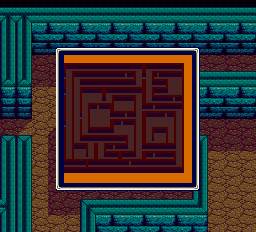
But I say “almost,” because this game does have the courtesy to provide a map, unlike Xak. And with a map, navigating through dungeons wasn’t actually all too difficult. …However, the main issue, in my run, was that I didn’t know you could view maps until about halfway into the game.
You may say that’s a skill issue on my part, but in my defense, I wasn’t even aware of the quick menu until that point. I never interacted with the one NPC who explains that a quick menu even exists, and the Select button is so seldom used in a lot of these games that I wouldn’t think it would do anything.
On top of that, all the other quick menu options, like TeamSpeak and saving/loading, are also accessible through the main menu. However, the map is ONLY accessible via the quick menu, so like…fuck me, I guess.
But hey, at least I discovered the map before I got to the second visit to the forest maze. I couldn’t imagine the living hell of trying to navigate Dhadhva Forest without a map or a guide, while also dealing with unskippable random encounters.
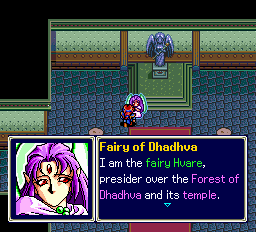
Navigating the overworld, though, is like navigating a dungeon in and of itself. The overworld is extremely vast, and there are a lot of areas and entrances to required dungeons that look like you aren’t intended to traverse.
Like, as a comparison, imagine the warp zone in Super Mario Bros. Imagine if, instead of a nice bonus thing that makes beating the game quicker, it was a required area needed to complete the game.
Or, like in FE4, imagine if finding Lex’s Brave Axe through that secret event was required to progress in the game, instead of just a secret fun bonus thing you’d find either by accident or rumors. …Though in the second example, a lot of fans like to act as if it’s a required thing.
The point is that in the overworld for this game, unless you have a clear idea of where you want to go, it’s really easy to get lost. And early on, if you accidentally wander somewhere that you’re not supposed to be, not that there is any clear indication, the stronger enemies in that area can and will kill you instantly.
The music, like many other CD-based games, makes use of Red Book audio, allowing for clean, CD-quality tracks. As a whole, though, the soundtrack didn’t leave a huge impression on me. Most of the songs are pleasant enough during gameplay, but only a few of them stuck with me enough to revisit outside the game.
That said, there’s a nice amount of variety here, with roughly 36 tracks in total. One detail I particularly liked is how battles use three different combat themes. There’s the boss theme, of course, but even generic enemy encounters have separate themes depending on whether you’re in a dungeon or traveling out in the field.
Of the battle tracks, Battle 1, which plays in the field, stood out to me the most. It’s catchy, energetic, and carries a light sense of adventure. The only downside is that you’ll be hearing it a lot.
While many of the dungeon themes felt a bit forgettable to me, one track I genuinely enjoyed was “Invitation to Fierce Battle.” It first plays when you enter Fravard’s manor, and its tense opening immediately captures the feeling of infiltrating or storming a heavily guarded stronghold. As the track progresses, the guitar briefly drops out, and the tone becomes softer and more serious, toward something more emotionally driven and dutiful—before building back into its more intense arrangement.
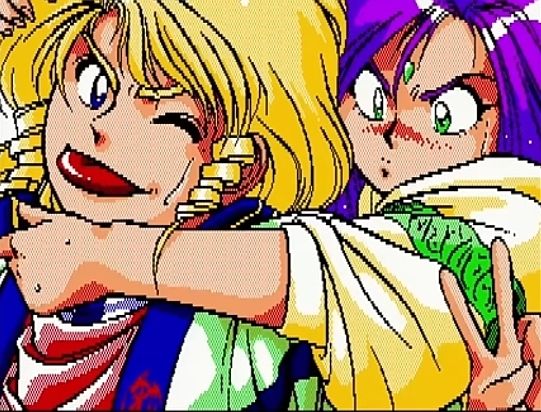
As for the graphics, there isn’t much for me to say. They’re just good, though in terms of graphics, I’m very easily impressed. An anime-style game with 16-bit graphics already floors you at 3 out of 5 stars from me. But beyond that, I like the colors and aesthetic, and the cutscenes are great to look at.
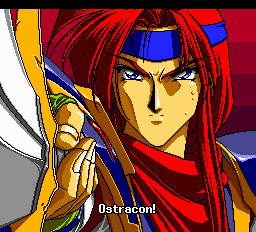
The PC-88 version was the first version of the game, and it’s quite different. For one, the whole prologue chapter isn’t here; you start at Hill of Prayers with Altrushan already in his human form. The usage of the Silver Scale isn’t explained to you until a bit later on in the game.
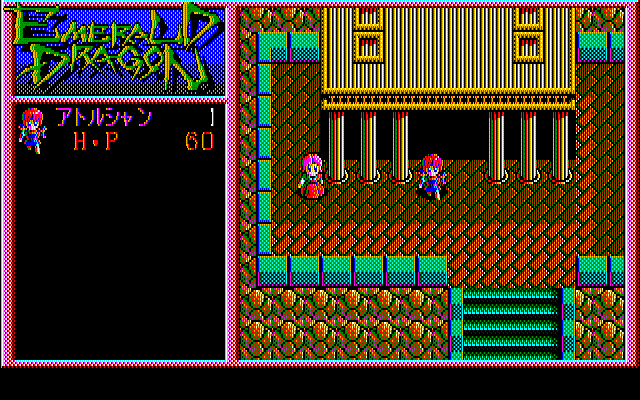
Something else to note is that the OST is completely different. Like, it’s not even a PC-88 rendition of the PCE soundtrack or anything, they’re just straight-up different songs. It overall gives this original version a different vibe from the PCE and SFC versions. Which ever version is better is completely subjective. But this game was also among the first PC-88 games compatible with the Soundboard II.
One of the biggest gameplay changes is that, unlike the PC Engine version, you get a game over if ANY of your party members dies, not just Atrushan. With how easy it is for some units to fall in battle, this sounds like it can be a bit rough. Another thing to note that makes this game a bit rough is that there is no fast travel option; in fact, none of the older PC versions have it.
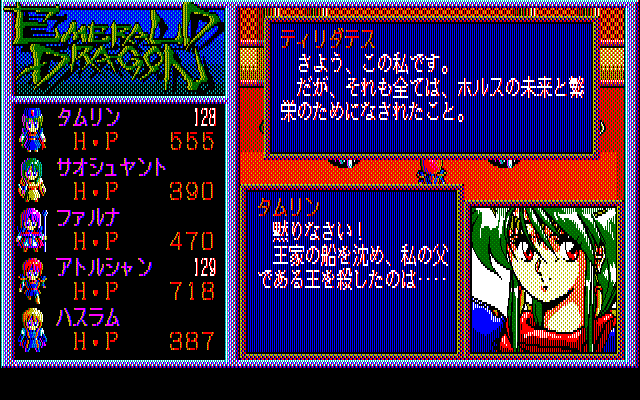
This version also contains a game-breaking bug. There’s a dungeon in the game where you have to obtain an item for Ostracon called the Avesta. However, to obtain the Avesta, you must fight a Zombie Dragon boss. After you defeat the Zombie Dragon, he drops one of the Emerald Graces, the Golden Fangs.
Obviously, your natural gamer instinct would be to pick it up, right? I can’t imagine too many people seeing a golden piece of jewelry appear next to you after defeating a boss, then just deciding to fuck off and not pick it up. However, if you pick that up, you’ll get warped to the dungeon’s entrance, and if you exit the dungeon, you then get softlocked since you never picked up the Avesta.
You’re supposed to get the Avesta first, then get the golden fang. This was fixed in the PC-98 version and later versions by making you automatically obtain the Avesta upon defeating the Zombie Dragon.
But in addition to the game’s release, there was a special disc containing the BGM as well as unused CGs.
The PC-98 version was essentially a straight port of the PC-88 version, but it is seen by a lot of people as the inferior version. At the time of release, the PC-98 didn’t have an equivalent of the Soundboard II yet, so the OST doesn’t utilize all the sound channels and stereo sound, and the sound was only compatible with the PC-9801-26K.
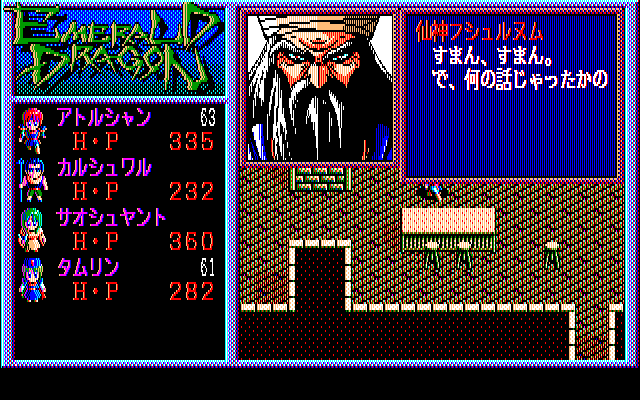
Also, while this version fixed some bugs from the PC-88 version, it also introduced some new ones, like a softlock where, if you equip Falna with the Particle Cutter obtained in one of the sidequests, a bug occurs in two boss battles, preventing you from entering the city of Horus and displaying “E.JUN’s responsibility.”
Additionally, on some later NEC PC-9800 series models, such as the PC-9801DA, if you don’t lower the system’s operating clock frequency to 8MHz before powering on the system, not only will the background music not play, but the game will crash immediately after the game disk starts, as soon as Atrushan descends to Hill of Prayers.
The X68000 version had changed the art style a bit due to the original visual designer, Akihiro Kimura, moving to Right Stuff. The game was revised further, and they claim this version is “free of bugs.”
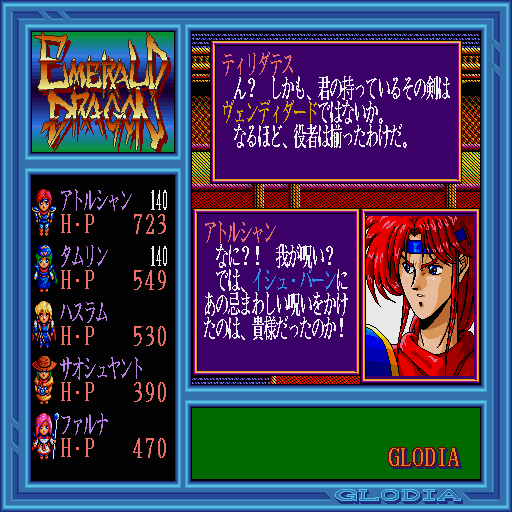
The MSX2 version was one of the versions of the game to have received an English fan translation released by a guy named dan. Additionally, dan also released a Spanish fan translation just in case anyone who can only read Spanish, but somehow read through this whole article was interested. That said, I don’t know if I’d recommend trying this version, because it has a lot of issues with scrolling speed and overall is a bit hard to play.
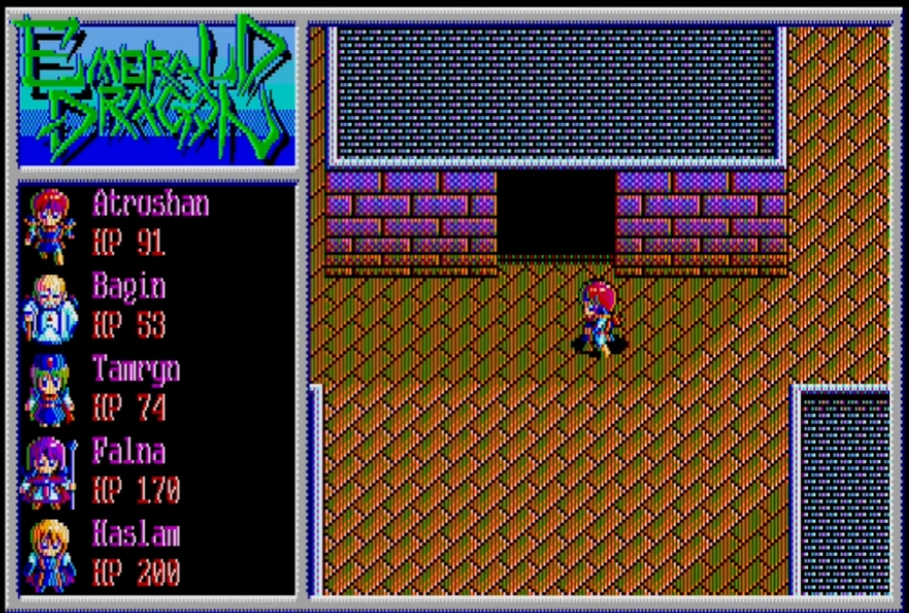
The FM Towns version of the game was the first to use CD audio voices for cutscenes, and it uses a completely different voice acting cast than the PC Engine version. The music, though, uses FM sound rather than CD audio.
The HUD and game sprites were also completely redone, and I honestly like the aesthetic of this version more than the other versions.
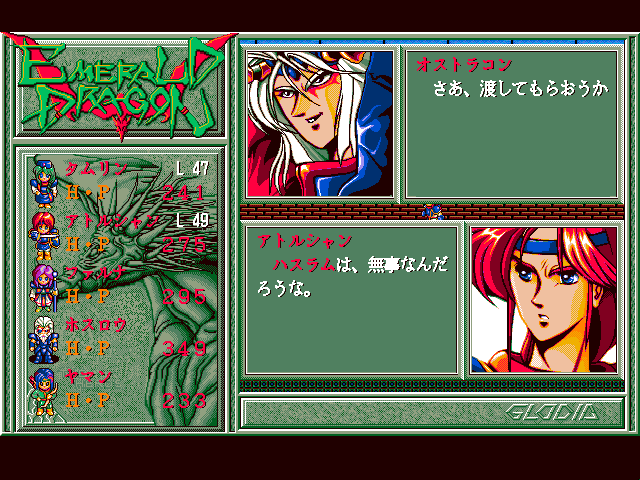
Lastly, there is the Super Famicom version. Like the PC Engine version, this version is more of a remake of the PC versions than a straight port. This version was based on the PC Engine version, and a lot of the changes the PC Engine made to the originals also apply to this version. The OST is the same as the PC Engine version, but using the SFC sound chip.
The full motion cutscenes and voice acting had to be cut due to hardware limitations and replaced with the standard text boxes. Though some small voice lines were added, like during the introduction, and the grunts in battles.
Since this is a Super Famicom game, there are some added Mode7 parts as well as a simplified world map that is easier to explore and traverse, thank goodness. In general, the PC Engine version was a lot easier than the PC versions, and the SFC version is even easier than the PC Engine version.
One of the biggest changes is that now, every character can level up, not just Atrushan and Tamrin. Each character also has attack animations for when they attack enemies in combat.
Another change is the “Dragon” option in battle. It allows Atrushan to transform into a dragon for a short time during battle, and depending on the Emerald Grace he has, he can transform into different dragons.
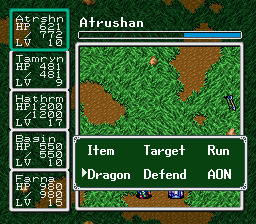
One detail that I find pretty cool is that the game allows you to change the background in menus and stuff. You can change it to a straight blue background, a green one, or this very cute red one with Altrushan and Tamrin sprites coating the screen.
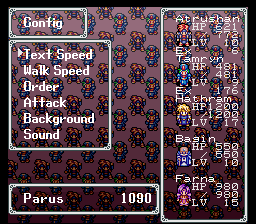
The fan translation for this version was released in 2014 by a group called Translation Corporation, consisting of Nightcrawler, Eien Ni Hen, and FlashPV. While I stated that I like the fan translation of the PC Engine version more, this patch is nothing to sleep on either. It’s likewise presented very professionally, and fits in well with the scripts of a lot of the other JRPGs on the same system, such as Chrono Trigger and Final Fantasy IV.
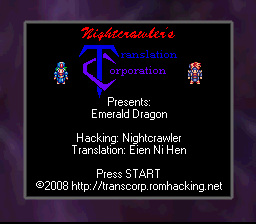
Like with the PC-Engine version, even if you don’t plan to try this version, I heavily recommend reading through the readme file provided with this patch because it contains a good rundown on the history of the patch.
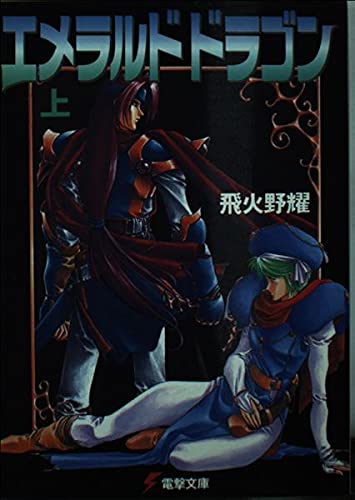
In terms of supplemental media, there’s honestly a lot, too much to be able to go through in this article alone. Not to mention that not a lot of it is super interesting, like the manuals, guidebooks, and the demo version of the PC Engine version. That said, I will go over a lot of the more interesting ones. For example, while there are a lot of books, did you know there were also novelizations? You probably did, but the first one I’m going to talk about is simply called “Emerald Dragon.”
This novelization was written by Akira Tobihino and illustrated by Akihiro Kimura in 1994. The story was comprised of two volumes, the Jōkan volume and the Gekan volume, and features significant changes to character personalities and the settings. For example, now Altrushan has lost his memory after becoming human, and Tamrin cannot use magic, and is also unaware that Altrushan is a dragon.
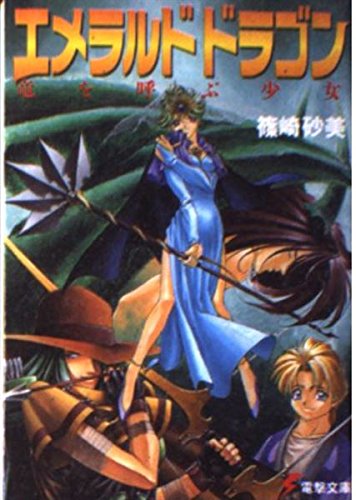
The next novelization came in 1995, by Sami Shinozaki, who, fun fact, wrote novelizations for many other games like Fire Emblem: Thracia 776, Fire Emblem: Mystery of the Emblem, and Armored Core. This novelization, Emerald Dragon: The Girl Who Summons Dragons, is a sequel to Tobihino’s work, but altered to be more in line with the actual game. It’s also set 200 years into the future.
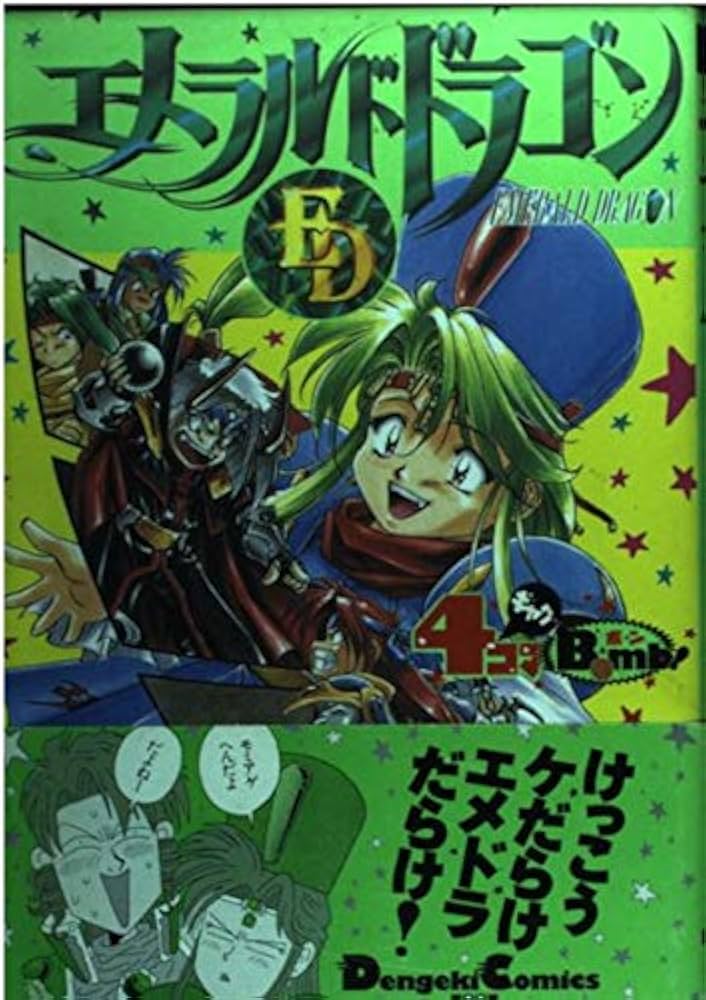
There’s the Emerald Dragon 4koma, Emerald Dragon 4-Panel Gag BOMB! by Mediaworks Dengeki Comics EX. It’s an anthology of 4koma by various artists, which also includes developer interviews regarding the SFC version of the game.
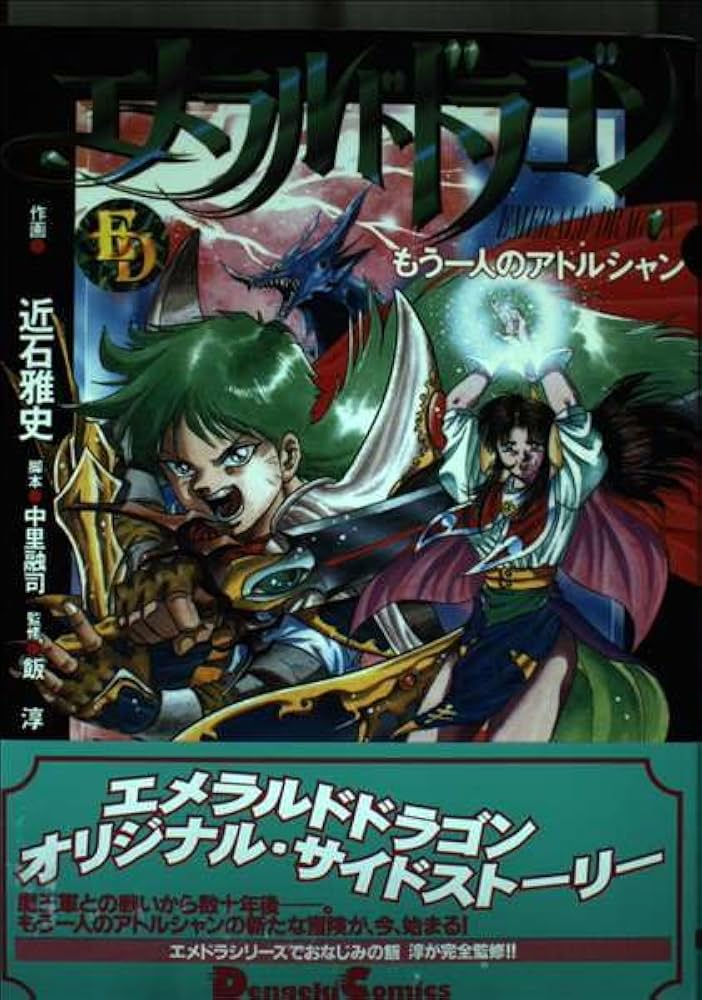
There’s also Emerald Dragon: Another Atrushan by Yuji Nakazato, written in 1995. A manga that features Atrushan and Tamrin’s grandchild as the protagonist. A few characters from the original appear in this, but obviously, considerably older.
There was also the manga, “I wish…” written by Akihiro Kimura and published in 2000. It’s a one-chapter story based on the death of [REMOVED TO AVOID MAJOR SPOILERS FOR EMERALD DRAGON].
Various CDs include the soundtracks from the games, as well as a Radio Drama by Polystar Inc. The Radio Drama was broadcast on Bunka Housou’s radio program “Emerald Dragon” to coincide with the release of the SFC version. It ran for a total of 20 episodes and was later released on a CD. Although it was a related product for the PC Engine version, some of the voice actors were changed from the game. Additionally, some characters received voices for the first time, such as Sada’s wife (voiced by Makiko Ohmoto) and Ghomez (voiced by Shōgo Sakamoto). The story follows the PCE version’s storyline. Differences from the game include the fact that the party limit is no longer five, and the fact that the Shamaness of the Mount does not appear.
There’s also Ga-Ryu: GALLANT ROYALBLUE, a written work by Atsushi Ii. It was serialized in six installments in the magazine Marukatsu PC Engine. It depicts a war encompassing Ishbern, Draglia, and other realms, and takes place several years after the PCE version. It also features stuff like the revival of Ostracon, the segregation of the dragonkin, and the fall of the Emerald Dragon. But due to internal politics relating to the split of Kadokawa Shoten, the second part was never completed.
There was also a planned SRPG called The Chronicles of Ishbern. It depicted the war between the humans and the Hellions from Ostracon’s perspective and functioned as a side story to the main game. Info on this game was alluded to in Softbank’s GAME BLAST magazine, but development was allegedly cancelled due to negotiations falling flat between Atsushi Ii—who was focused on developing the game Seiya Monogatari: AnEarth Fantasy Stories—and the company producing the new entry in the series.
Then, in 2015, Kimura began work on a sequel to Emerald Dragon titled Elemental Dragoon: The Two Lights. Set ten years after the original game, it featured a new cast of characters, including the protagonist Baraj and the heroine Khamel. Although the project failed to materialize for a long time, a crowdfunding campaign was eventually launched with the initial goal of producing a drama CD. Kimura later commented on the game version’s release page that it “may be best viewed as one possible multidimensional future in a multiverse-like setting.”
Elemental Dragoon eventually reached its crowdfunding goal and received a two-volume drama CD release: the jōkan volume, titled Bonds, and the gekan volume, titled Weaving, both released in May 2016. As a reward for contributors who pledged 20,000 yen or more, an illustrated movie was produced in which artwork created by Kimura was displayed in sync with the drama CD.
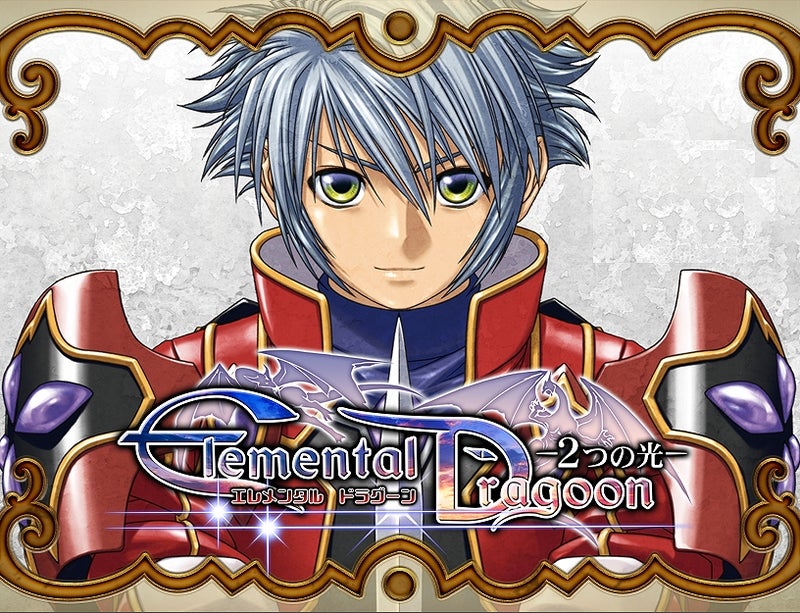
In 2022, a game adaptation of Elemental Dragoon was created using RPG Maker MV. The story follows the events of the drama CD while adding several new characters and scenarios. The game was also distributed for free on BOOTH, allowing curious fans to try it themselves—provided they can read Japanese.
Eventually, a sequel trilogy featuring completely revamped gameplay systems and presentation was released, consisting of Element Ad Lapis: The Lost TRI STONE, Engage of Memories: The Dark Dragon, and Eclipse the Megadraft: The Princess of Slashing. Kimura refers to these works as “the sequels to the sequel” of Emerald Dragon.
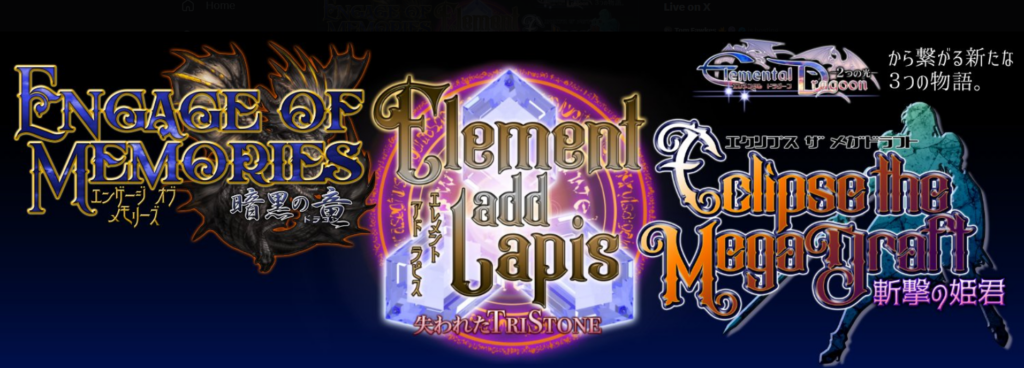
Element Ad Lapis: The Lost TRI STONE follows Baraj and Khamel and takes place after Elemental Dragoon. Engage of Memories: The Dark Dragon features Atrushan and Tamrin embarking on a new adventure to defeat Ostracon once again. Lastly, Eclipse the Megadraft: Princess of Slashing follows Flōra, a character from Elemental Dragoon, as its protagonist. Although she originally died in Elemental Dragoon, she is resurrected and sets out on an adventure of her own.
A sidenote, also, something that is really cool is seeing Atrushan and Tamrin in a more modern art style. It’s really cool, and honestly, worth checking these games out alone. Of course, after you play the original Emerald Dragon.
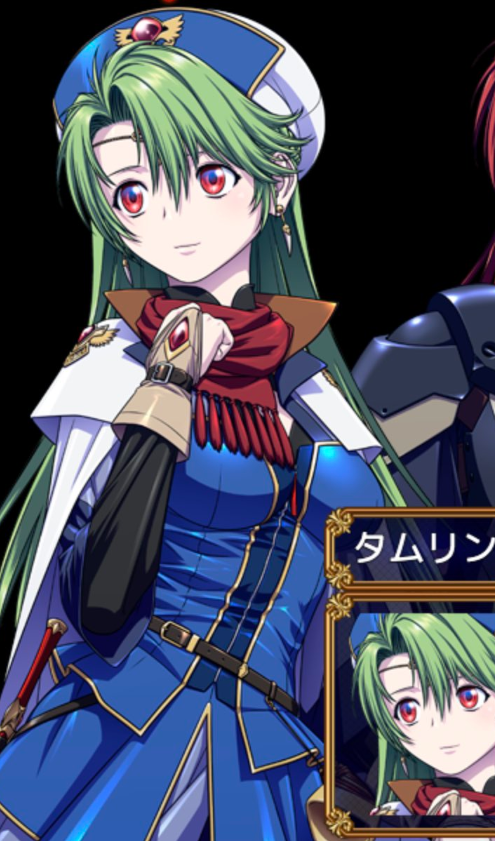
Additionally, in Zavaş, that game features a Dragon Kingdom, which was meant to foreshadow Emerald Dragon. Bible Master has a Wyvern Village where you can hear a tale about a blue dragon that crossed the skies above the continent to fly somewhere else. In AliceSoft’s Toshin Toshi, a swordsman named アドルシャン (Adorushan) appears, a reference to Adol (アドル lit. Adoru) Christin from Ys, and Atrushan (アトルシャン lit. Atorushan).
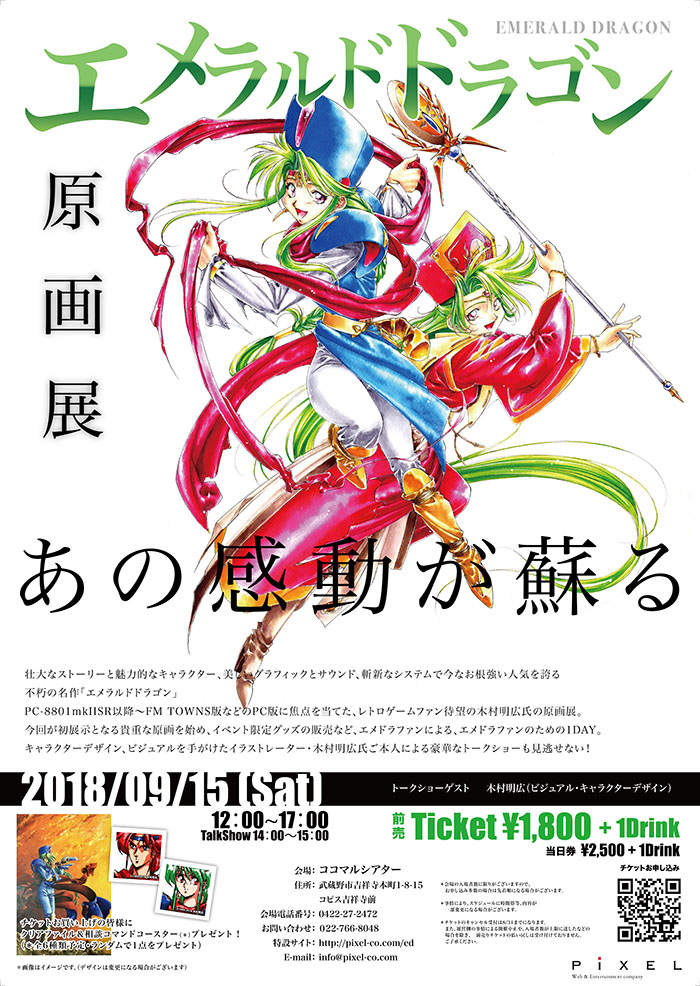
Hell, there was even an art exhibition that took place September 15th and 16th, 2018, featuring Akihiro Kimura’s original artwork from Emerald Dragon. When I say these games were hits in Japan, I meant it!
With a lot of games that never left Japan, a lot of the ones that I like to focus on are some of the weirder ones, ones that I feel are genuinely life-changing, or ones that I feel are grossly overlooked. Emerald Dragon is one of those games where it’s not exactly life-changing, it’s not super unique or weird enough, and while it is overlooked, in Japan, it is quite popular.
Emerald Dragon is just, plainly, a good story with endearing characters, an extensive world, and great drama. The gameplay, while not my favorite iteration of it, is engaging enough to keep me awake throughout the whole adventure and is better than many games that were officially brought over in English. I honestly struggle to see why this game wasn’t ever brought over officially to the US beyond the fact that JRPGs weren’t super popular at the time.
While it doesn’t reach the heights of some of my all-time favorite JRPGs like Lunar: The Silver Star, it’s definitely in my top 10. If you’re looking for a JRPG of decent length and a great story that you haven’t tried before, I would definitely recommend trying out Emerald Dragon. The PC Engine version is absolutely a worthwhile playthrough, but if you can’t play that version, the SFC version is worth a look at as well. With that, I thank you for taking the time to read through this article, and I hope to see you for the next one. Have a good rest of your day!

About Site
Project Gallery
Dictionary
Ko-Fi
MyAnimeList
HowLongtoBeat
MyFigureCollection
Itch.io
BlueSky
(C)Copyright men-est - 日本全国の招福メンズエステ検索サイト Introducing only the best massage and relaxation salon(YAPPARI 錦糸町)東京墨田区錦糸町駅北口から徒歩1分 TEL:03-5610-9034 招福メンズエステリラクゼーションLooking for great massage in Japan only in www.men-est.com (YAPPARI 錦糸町)東京墨田区錦糸町駅北口から徒歩1分 TEL:03-5610-9034No more hesitate to access to men-est.com here where people can enjoy so much of fun and happiness in this relaxation salon. (YAPPARI 錦糸町)東京墨田区錦糸町駅北口から徒歩1分 TEL:03-5610-9034 招福メンズエステリラクゼーション. |